Why Inflammation is the Biggest Culprit for Jet Lag Symptoms
Jet Lag Isn't Just About Sleep
We've all been there. You step off a long flight, and despite your best efforts to adjust, you feel absolutely terrible. Your energy is gone, your brain feels wrapped in cotton, your stomach is feeling nauseous or bloated, and you're inexplicably cranky. This collection of misery has a name: jet lag.
Most people think jet lag is simply about sleep disruption. Your body clock gets confused when you cross time zones, wrecking the sleep pattern and making it hard to fall asleep or wake up at the right times. While that's true, it's only part of the story.
Recent scientific research reveals something fascinating: inflammation may be the missing link that explains why severe jet lag hits so hard. It's not just that you're tired from crossing time zones. Your entire body is actually dealing with a complex inflammatory response triggered by air travel itself.
Understanding the role of flight inflammation changes everything about how a traveler can better approach jet lag recovery.
Understanding Inflammation – The Silent Saboteur
What is Inflammation, Really?
Inflammation isn't inherently bad. In fact, acute inflammation is your body's natural healing response to injury or stress. When you cut your finger, inflammatory cells rush to the site to fight infection and begin repair. This type of inflammation is protective and temporary.
The problem arises when this natural response goes haywire and leads to chronic, low-grade inflammation – the kind that can persist for days or weeks after a flight. This systemic inflammation affects multiple organ systems and can make you feel genuinely unwell in ways that go far beyond simple tiredness.
Inflammation's Role in Jet Lag Symptoms
Here's where the science gets interesting. Many classic jet lag symptoms align perfectly with what we know about inflammation's effects on the body:
Fatigue isn't just about poor sleep or insomnia. When your immune system is activated, it actually changes the metabolism in your brain and slows down your cellular powerhouses called mitochondria. This creates profound physical exhaustion that feels different from normal tiredness and sleep deprivation.
Brain fog happens because inflammatory molecules called cytokines can cross into your brain and interfere with neurotransmitter function. This affects memory, concentration, and mental clarity.
Digestive issues occur because stress and inflammation can compromise your gut barrier function. The delicate lining of your intestines becomes more permeable, allowing bacteria and other irritants in, leading to discomfort, bloating, and irregular digestion.
Mood swings and irritability have a biochemical basis too. Inflammation affects the production of mood-regulating neurotransmitters like serotonin and dopamine and activates the threat monitoring parts of your brain, making you more prone to feeling anxious or down.
The gut-brain connection plays a crucial role here. Your digestive system houses about 70% of your immune system, and travel-related stress can trigger widespread inflammatory responses that affect your entire body.
Understanding the Inflammatory Triggers of Air Travel
Air Pressure and Hypoxia
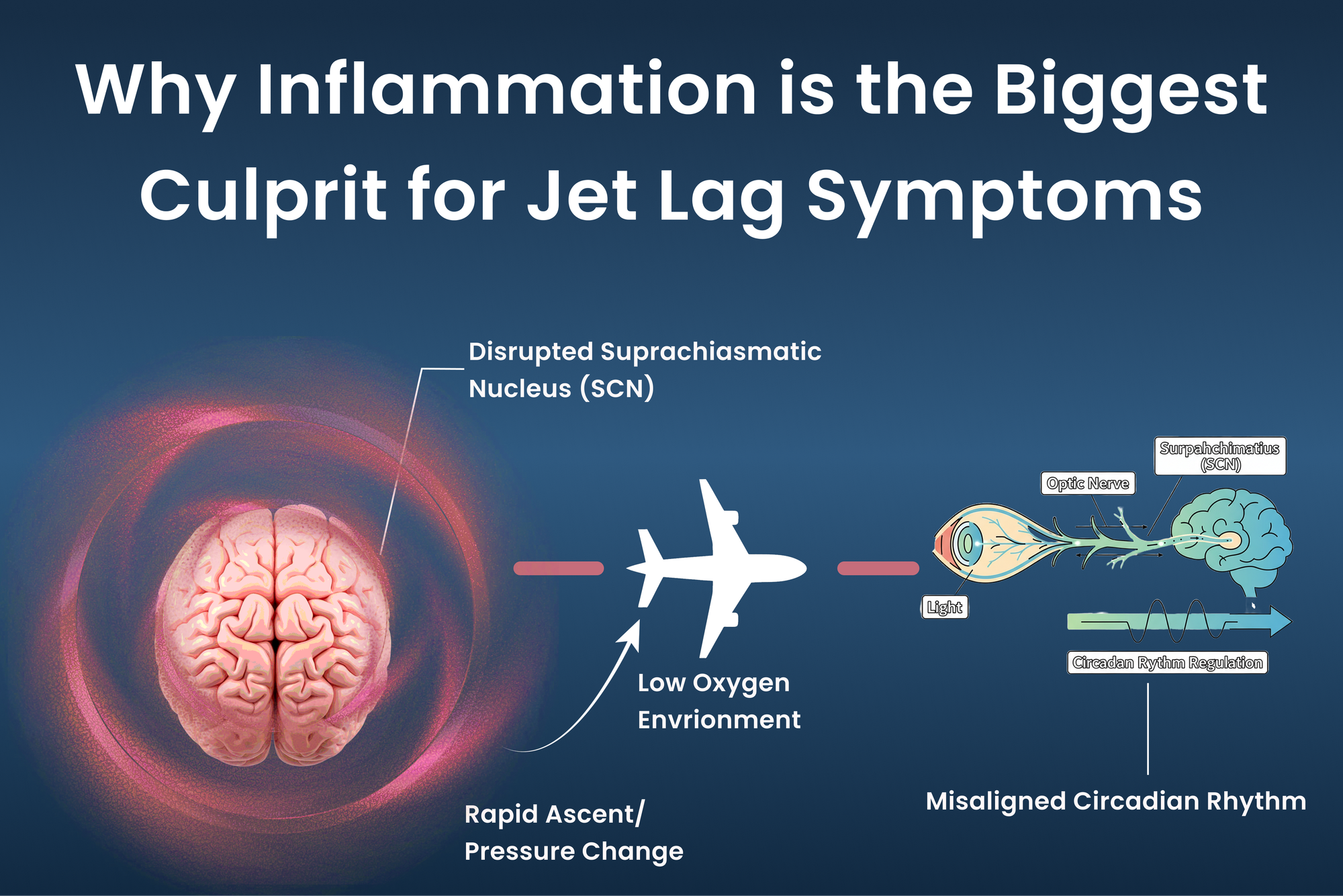
At cruising altitude, cabin pressure is equivalent to being 6,000-8,000 feet above sea level. This means you're getting less oxygen with every breath, creating a mild state of hypoxia that triggers oxidative stress throughout your body.
The reduced oxygen environment creates oxidative stress at the cellular level. When your cells don't get enough oxygen, they produce more free radicals – unstable molecules that damage cellular structures and trigger inflammatory pathways. This process can begin within minutes of takeoff and may persist for days after landing.
Dehydration and Environmental Stress
Cabin air is notoriously dry, with humidity levels often below 20% – drier than most deserts. This dehydration affects every cell in your body and makes you more vulnerable to inflammatory stress. Even mild dehydration can amplify inflammatory markers in your blood and reduces your body's ability to flush out inflammatory waste products.
Circadian Science and Immune Confusion
Your immune system actually has its own circadian rhythm. Different immune cells are more or less active at specific times of day. When you suddenly shift time zones, this carefully orchestrated immune schedule gets scrambled.
The result? Your immune system becomes hyperreactive and more likely to trigger inflammatory responses to normal stimuli. It's like your body's defense system is stuck in high alert mode.
Diet, Movement, and Metabolic Stress
The typical airplane meal – high in refined carbohydrates, low in fiber, and loaded with preservatives – can spike blood sugar and trigger inflammatory responses in your gut and throughout your body.
Prolonged sitting creates its own inflammatory cascade. Hours of immobility causes blood to pool in your legs, reduces circulation, and creates metabolic stress. Poor circulation leads to blood pooling, reduced lymphatic drainage, and increased production of inflammatory molecules in muscle tissue.
So, How Can You Fight Inflammation While Flying?
Anti-Inflammatory Nutrition
What you eat before and during travel can significantly impact your inflammatory response. Focus on whole foods rich in antioxidants and anti-inflammatory compounds.
Before flying, load up on colorful vegetables, lean proteins, and healthy fats. Avoid ultra-processed foods, excessive sugar, and alcohol, which can all prime your system for inflammatory responses. So even if it helps settle your nerves, you might want to skip the gin and tonics when the drinks cart comes by during your flight.
Look for foods containing natural anti-inflammatory nutrients: fatty fish rich in omega-3s, berries packed with polyphenols, turmeric with its active compound curcumin, and fresh ginger, which has been shown to reduce motion-related nausea and inflammation.
Move and Hydrate Strategically
Simple movement during flight reduces inflammatory stress. Basic exercises like ankle circles, calf raises, and walking the aisles help maintain circulation and prevent blood pooling.
Start hydrating before your flight, continue during travel, and prioritize rehydration upon arrival.
A Comprehensive Anti-Inflammatory Approach
This is where Flykitt takes a different approach. Rather than addressing jet lag symptoms after they appear, Flykitt tackles the inflammatory root cause during travel itself.
Flykitt's system combines targeted supplementation with behavioral guidance through a personalized jet lag app. It even sends alerts to seek light exposure at certain times to minimize disruption to your sleep cycle. The supplements contain carefully selected anti-inflammatory ingredients like organic pomegranate extract and vitamin C to combat oxidative stress, plus compounds that support circadian rhythm adjustment and reduce inflammation and travel fatigue.
What makes Flykitt unique is its comprehensive approach. While a traditional jet lag app or melatonin supplement focuses primarily on sleep timing, Flykitt provides a personalized plan to address the full spectrum of inflammatory triggers – from cellular oxidative stress to gut barrier protection to immune system support. This is why 93% of Flykitt users can travel anywhere with minimal to no jet lag symptoms.
Rethinking Jet Lag from the Inside Out
Jet lag is more complex than we once thought. While circadian rhythm disruption remains important, inflammation may be the missing piece that explains why people can still suffer from jet lag symptoms even if sleep disruption is minimized. Flight inflammation is even why you feel bad on shorter flights with no major time change.
The airplane environment creates a perfect storm of inflammatory triggers: reduced oxygen, dehydration, poor nutrition, immobility, and circadian misalignment all working together to activate your body's stress response systems.
Managing inflammation doesn't just help you sleep better in a new time zone. It helps your entire body feel better, think clearer, and recover faster. The next time you travel, remember: you're not just managing your sleep schedule. You're managing your body's inflammatory response and conquering jet lag before it starts, even if you're crossing multiple time zones.