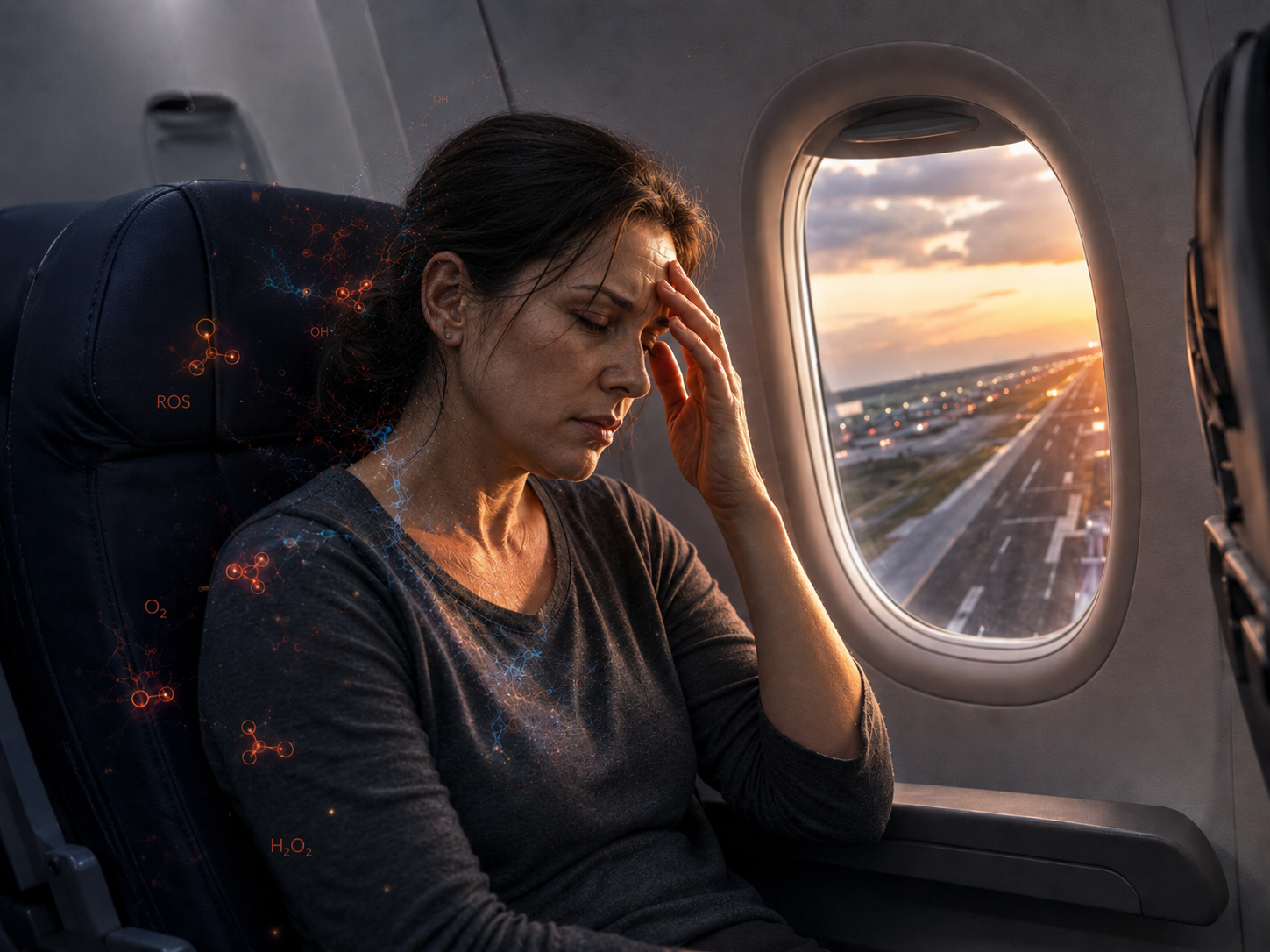
Oxidative Stress: A Hidden Stressor from Flying
You board your flight feeling energized. Hours later, you step off the plane with a headache, brain fog, and dry skin, feeling bloated and an overwhelming urge to collapse into bed.
Most travelers blame dry air, cramped seats, dehydration, or a lack of sleep, but while those factors certainly play a role, there's another culprit quietly working behind the scenes: oxidative stress.
Oxidative stress is a biochemical cascade of effects triggered by the unique conditions of air travel, and it begins affecting your body long before you reach your destination. From your blood vessels and brain to your gut, immune system, and energy production, oxidative stress can influence how you feel during and after a flight.
Understanding this hidden travel stressor is the first step to preventing it and feeling much better when you arrive.
The Invisible Challenge of Air Travel
Most people think flying is uncomfortable because of cramped seats, recycled air, and long hours of sitting. These matter, but commercial air travel exposes your body to several other physiological stressors at the same time.
At cruising altitude, airplane cabins are typically pressurized to the equivalent of being at eight thousand feet above sea level, and you experience this change in 15 minutes. While generally safe for healthy travelers, this results in major physiological changes in the body as a result of the rapid pressure drop and the 26% less oxygen available than you're accustomed to on the ground.
At the same time, cabin humidity often drops to levels comparable to some of the driest deserts on Earth. Add disrupted sleep, travel stress, changes in meal timing, and prolonged sitting, and your body suddenly has a lot to manage. These conditions create the perfect environment for oxidative stress to overwhelm your usual defenses and cause major travel symptoms.
What Is Oxidative Stress?
To understand oxidative stress, first imagine a gasoline car engine. One of the byproducts of combustion in the engine is heat, and if the engine isn’t running properly, your cooling system is broken, or any number of other things go wrong, your engine can overheat, damaging not only itself but other parts of your car if it gets hot enough and causes a fire or other components to melt.
In a similar way, in mitochondria, your cell’s energy production centers, when there’s not enough oxygen or the other pathways aren’t running efficiently, more highly reactive compounds called free radicals are produced. And when maintenance systems like antioxidant production aren’t running well or they get overwhelmed by free radical production, then the free radicals not only damage the mitochondria, but can also escape and damage other parts of the cell.
And this can become a chain reaction. Free radicals cause damage by stripping electrons away from molecules they interact with, and just like heat can cause a fire that can spread, when a free radical damages a molecule, it sometimes turns that molecule into a free radical, causing a chain reaction. With enough free radicals and enough damage, we call this oxidative stress, and your body has to react to manage it.
How Flying Increases Oxidative Stress
Reduced Oxygen Availability
Even modest reductions in oxygen availability interfere with efficient mitochondrial function and can increase the production of reactive oxygen species, one of the primary drivers of oxidative stress. On a plane, you are typically breathing 26% less oxygen at altitude, so this can be an important factor.
Dehydration Amplifies the Problem
Most travelers understand that flying causes dehydration. What many don't realize is that dehydration and oxidative stress are closely connected. When cells become dehydrated, they operate less efficiently. This can increase oxidative damage while simultaneously reducing cells’ ability to defend themselves.
Sleep Disruption Creates Additional Stress
Poor sleep doesn't just make you tired. Research shows that sleep deprivation can reduce efficiency and coordination in many of your body’s systems, which can lead to oxidative stress while reducing the body's natural recovery processes.
Prolonged Sitting Impacts Circulation
Long periods of inactivity can affect blood flow and vascular function. Healthy circulation helps deliver oxygen and nutrients while removing metabolic waste products. When movement decreases for hours at a time, your body loses one of its most effective ways to maintain optimal physiological balance, which can then reduce resilience to oxidative stress.
On a plane, you also aren’t working out or taking a sauna, so you can’t get the benefits of these modalities that cause your body to amp up its protective systems, which defend against oxidative stress.
What Oxidative Stress Can Affect
Oxidative stress doesn't target just one system. It can influence multiple areas that travelers commonly notice after a flight. One of the major reasons is that when there is enough damage, your body’s immune system reacts to clean it up, and this inflammation can cause further effects.
Your Brain
Ever feel mentally slower after landing?
Many travelers describe difficulty concentrating, forgetfulness, low energy, worse focus, and "travel brain." Oxidative stress and inflammation are factors researchers believe contribute to these symptoms.
Combined with sleep disruption and time zone changes, this can leave you feeling mentally disconnected even when you’ve been excitedly anticipating your trip for months.
Your Blood Vessels
Healthy blood vessels rely on a delicate balance of signaling molecules to regulate circulation.
Oxidative stress can temporarily disrupt this balance, affecting how efficiently blood vessels function. This is also exacerbated by inflammation, which can make your blood vessels more permeable, letting fluids leak out. While blood vessel function may not be noticeable directly, you probably do notice if your legs swell up and feel heavy or fatigued.
Your Gut
The gut is surprisingly sensitive to oxidative stress and inflammation. These can affect the coordination of your gut squeezing to move contents through and the permeability of the gut lining, meaning more protein fragments and bacteria can get through, which can lead to more inflammation and more bloating and discomfort. Combine this with changes in meal timing, altered sleep schedules, and dehydration, and your gut may not feel right for days.
Why This Matters More Than You Think
Many people assume travel fatigue is unavoidable. The reality is that much of what we blame on jet lag isn't caused by time zone changes. It’s caused by how our bodies respond to the flight.
When oxidative stress increases and inflammation sets in, recovery takes longer. You may lose a couple of days at a destination to exhaustion, wasting thousands of dollars in hotel rooms, excursions, and flight costs. Business travelers may struggle through important meetings. Families may spend precious vacation time trying to recover instead of exploring.
The goal isn't simply surviving a flight. The goal is arriving ready to perform, connect, and enjoy your destination.
How to Reduce Oxidative Stress Before It Starts
The good news is that oxidative stress can be managed. Small interventions before, during, and after your flight can significantly improve how your body handles travel.
Give Your Body the Nutrients It Needs
You can support your body's antioxidant defenses with specific nutrients that help it to function effectively. Taking antioxidants, like Vitamin C, can help defend against free radicals, and polyphenols, compounds found in fruits and vegetables, can turn on your protection systems preemptively. And if too much oxidative stress causes inflammation, then omega-3 fatty acids found in fish or supplements can help tamp that down. This is why Flykitt provides Vitamin C and organic pomegranate polyphenols in the Protect capsules and specially concentrated omega-3 fatty acids in Sustain soft gels in all Flykitt packs.
You can also support this via your diet by eating fruits, vegetables, and cold-water fish while traveling and by staying away from oxidative stress promoting foods, like those with lots of sugar or so much salt it dehydrates you.
Prioritize Hydration Early
Don't wait until you're thirsty on the plane. Begin increasing hydration the morning of travel and continue consistently throughout your journey. Proper hydration supports circulation, cellular function, and your body's natural protection systems.
Move Whenever Possible
Frequent movement supports healthy blood flow and reduces some of the physiological strain associated with prolonged sitting. Simple walks through the terminal, stretching, and brief movement breaks during the flight can make a meaningful difference.
Support Sleep and Circadian Rhythm
Quality sleep remains one of the body's most powerful recovery tools.
Aligning sleep, light exposure, supplements, and meal timing properly can help reduce the combined burden of jet lag and oxidative stress. With Flykitt, there’s no guesswork to this. We provide Mellow and Circadian Reset supplements that help shift and lock in your circadian rhythm and blue light blocking glasses to manage light properly. And the Flykitt App gives you precise timing for when to use each tool, as well as eat and sleep, so you never have to guess.
How Flykitt Helps Travelers Stay Ahead of Flight Stress
Most jet lag products focus exclusively on circadian rhythms, but Flykitt takes a broader approach.
The reality is that travel symptoms aren’t caused by a single factor. It's the result of multiple physiological stressors occurring simultaneously: oxidative stress, inflammation, circadian disruption, mental stress, and dehydration.
Flykitt's personalized travel protocols are designed to address these challenges before they become problems. Each plan is customized to your flight schedule, destination, and time-zone shift, delivering targeted nutritional support exactly when your body needs it most. By supporting recovery, circadian alignment, and the body's natural defenses against oxidative stress and inflammation, Flykitt helps travelers arrive feeling more like themselves.
Instead of spending the first days of a trip recovering, you can spend them experiencing the world.
Travel Better, Feel Better
The next time you fly, remember that the biggest challenge may not be the cramped seat or the delayed departure. It may be invisible biological processes occurring behind the scenes.
Oxidative stress affects far more than most travelers realize. It can influence your energy, focus, mood, digestion, and overall recovery from air travel. Fortunately, once you understand what's happening, you see that there are steps you can take to prevent it.
Because the best trips aren't the ones you simply survive. They're the ones you enjoy to the fullest.